

How We Prepare Adaptive Boats and Equipment
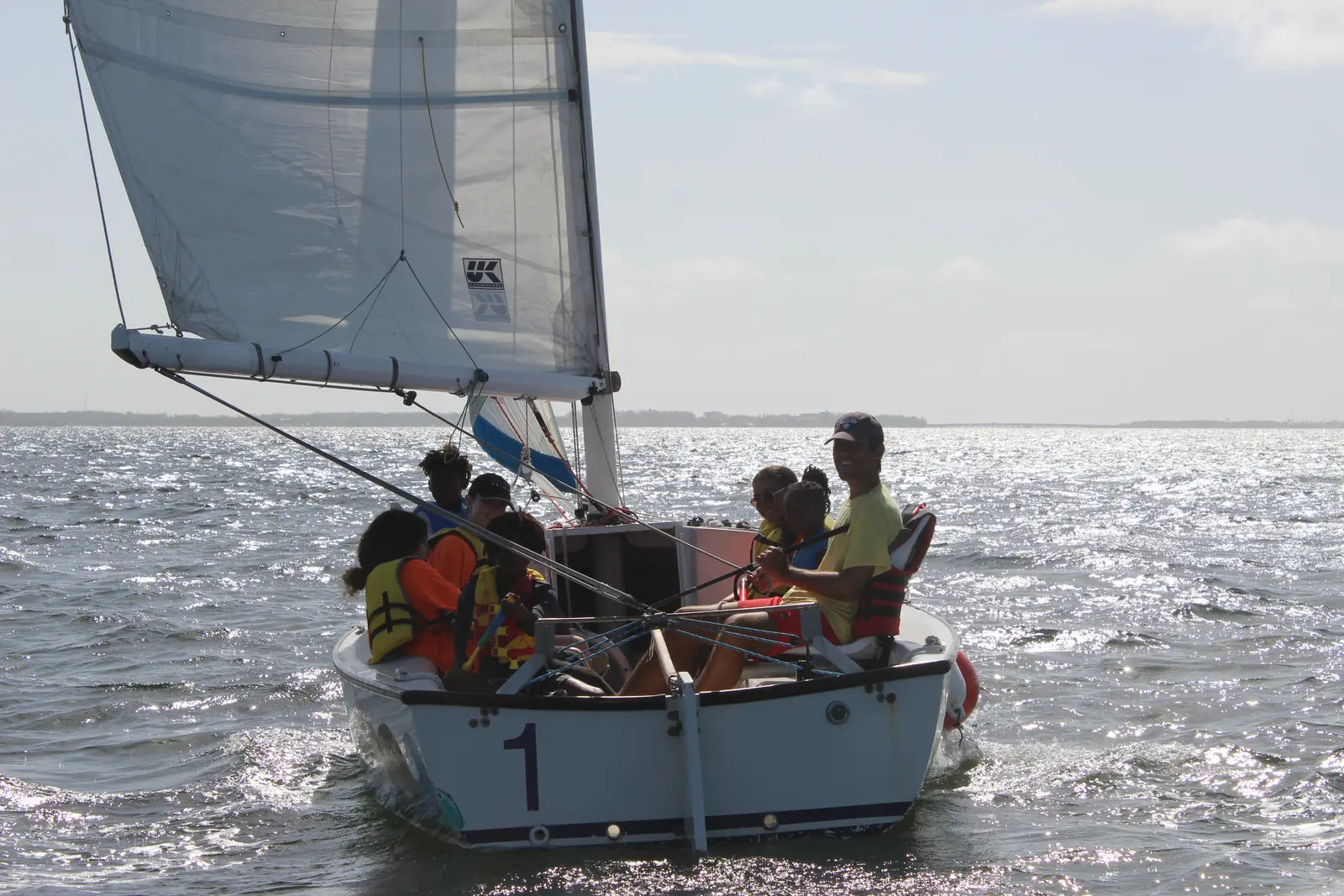
Shake-A-Leg Miami was founded on a simple belief: everyone deserves a way onto the water. Since 1990, we have learned what that takes, one boat at a time. Sailors with disabilities need boats that offer stability, agility and room to move on board, so each of our boats was either built for those needs or adapted to meet them.
Today the fleet counts 20 sailboats and 60 kayaks, along with a safety fleet of chase boats, all on Biscayne Bay in Coconut Grove. Here is how the main pieces work together to get people of all abilities out on the bay, and back again.
The Freedom Independence 20
The Freedom Independence 20 is where it all began. This 20-foot sailboat was built specifically for people with disabilities, and it is the boat Shake-A-Leg Miami started with.
That start has a personal story behind it. Harry Horgan, our co-founder and CEO, learned to sail growing up in Rhode Island. At 22, a car accident left him paralyzed. In 1990, he founded Shake-A-Leg Miami with his wife Susie and others. He and Susie had moved to Miami, where a sailing program for people with disabilities could run all year with fewer interruptions from the weather.
The same idea runs through the rest of the fleet: start with what the sailor needs, then find or adapt the boat to match. We want every person who comes aboard to have the tools, and the trust, to steer their own experience on the water.
Hobie Cats and keelboats
Different sailors want different boats, so the fleet offers more than one way to sail.
Our Hobie Cats are small, quick catamarans. They need crew on both sides of the boat, which makes every sail a team effort, and they are accessible to people with disabilities. If you like speed, these are the boats to ask about.
For lessons and certification, we teach on adapted keelboats, the boats behind our American Sailing Association (ASA) courses. One of them is Sandy, and our Keelboat Sailing crews take her out on the bay. Shake-A-Leg Miami is a registered ASA school, and certification starts with ASA 101, which needs no experience. The courses are open to sailors aged 16 and up, with and without disabilities, and they are also how veterans sail with us.
Several of our sailboats are also fitted with adaptive chairs. If you need one, or any other accommodation, ask us before you sign up and we will plan around it.
The Impossible Dream
The Impossible Dream shows how far universal design can go. She is a universally accessible 60-foot sailing catamaran, and a person who uses a wheelchair can fully operate her.
Mike Browne conceived and built the boat. Deborah Mellen later bought her as her way of giving back and helping other people with disabilities. Since 2014, Shake-A-Leg Miami has been her base. She is operated by Impossible Dream Inc., a separate nonprofit, and when she is not at our dock, she is out sailing the East Coast. Her voyages, from Cuba to Maine, raise awareness of what an experience at sea can do for quality of life.
Adaptive kayaks
Kayaking is one of the most freeing ways to be on the water, and we want it open to everyone.
Among our adaptive kayaks are three Creating Abilities kayaks, donated by the Woody Foundation. They use a Universal Seat and an outrigger system so that a paddler with a disability can head out independently and on equal terms with everyone else. Because every piece adjusts or comes off, the same kayak can be reset for each new paddler.
We also use stabilized kayaks that feel steadier on the water, ergonomic paddles for comfort, and seating support for paddlers who need it. You will find paddling in We Can Sail, Family Day Sail, Sunday Social, Seaworthy and our Outings. If you need an adaptive kayak, mention it when you sign up so we can plan for it.
The Pearson pontoon and chase boats
The Pearson is our accessible pontoon: 40 feet long, wheelchair accessible and with a covered deck.
Safety travels with every group. Our chase boats make up the safety fleet, and they go out with our sailors and kids on every outing on the bay. Every person on every boat wears a life jacket, and we provide them. Our staff are trained to support people with a wide range of needs, and they are certified in water safety, CPR and boating safety. Every volunteer passes a background check first.
The dock
Getting on the water starts on land. Our campus at 2620 S Bayshore Dr in Coconut Grove has accessible parking on site, with designated spots close to the entrance. From the parking lot, you can roll straight onto the dock. The campus also has lifts. At the water's edge, removable ramps make boarding easier, and our staff and volunteers are there to lend a hand. Caregivers are welcome on the boat, and family members and certified therapists can help out too.
You do not have to take our word for it: Wheel The World mapped our facility's accessibility independently. And on land, our three-story, universally accessible watersports building has been open since 2002, with classrooms, bathrooms and a rooftop deck.
Accessibility here is not an extra. It is built into the boats, the kayaks and the dock. Much of this fleet exists because people donated boats, or the money to keep them on the water. In November 2024, for example, a two-year grant from the Craig H. Neilsen Foundation funded new equipment for adaptive sailing, kayaking and fishing.
From a Romero Britto houseboat to a replica of Hemingway's Pilar, you can meet the rest of our adaptive, accessible fleet online. Ready for your first time on the water? Our guide to adaptive sailing in Miami covers the programs, the costs and the first steps. Tell us what you need by email at info@shakealegmiami.org or by phone at 305-858-5550, and we will plan around it.